
Conservative care
The foundation of lipedema treatment for every patient we see. Conservative care does not remove the diseased fat that already exists — but done consistently, it reduces pain, supports the strained lymphatic system, and meaningfully slows disease progression. It is the first thing we recommend, and it stays in place for life.
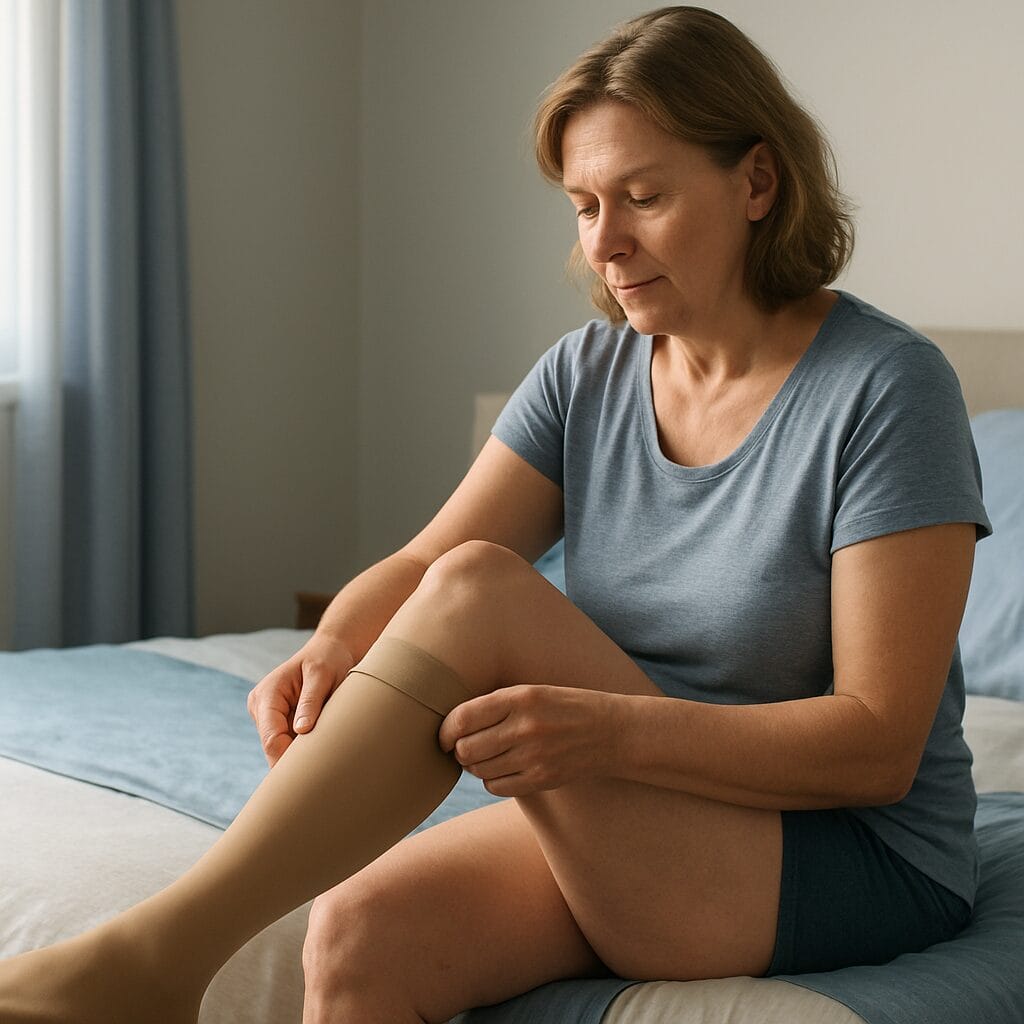
What is conservative care — and what isn’t it?
Conservative care is the package of non-surgical, daily-practice interventions that manage lipedema’s symptoms and slow its progression. It is not a cure. It does not remove existing lipedematous tissue. What it does, faithfully done, is keep the disease from getting worse as fast as it would on its own — and give patients back a substantial amount of daily comfort.
The five components
1. Compression garments
Medical-grade graduated compression — flat-knit garments fitted to your measurements — is the single most important piece. Worn during the day, every day, compression supports the lymphatic pump, reduces interstitial fluid accumulation, and keeps the tissue from continuing to expand. We help patients get correctly fitted (fit is everything) and develop a sustainable routine.
2. Manual Lymphatic Drainage (MLD)
Specialized hands-on therapy performed by a Certified Lymphedema Therapist (CLT). Light, rhythmic, very specific strokes that move lymph fluid toward functioning drainage. Frequency depends on stage: roughly weekly to bi-weekly early on, more often if the limb is congested, less often as a maintenance rhythm later. We coordinate with CLTs in your area when you’re not in Scottsdale.
3. Anti-inflammatory nutrition
Lipedematous tissue is chronically inflamed. An eating pattern that lowers systemic and tissue-level inflammation — often the Mediterranean pattern, sometimes the more structured RAD (Rare Adipose Disorders) approach — meaningfully helps. We aim for sustainable, not punishing. Calorie restriction alone does not remodel lipedematous fat the way it remodels ordinary fat, but a coherent nutrition plan still matters for inflammation, energy, and overall health.
4. Lymph-friendly movement
Low-impact, lymphatic-supporting activity:
- Swimming and aquatic exercise — the hydrostatic pressure of water is itself a gentle, constant compression.
- Walking — even short, frequent walks support the calf-muscle pump.
- Deep-breathing and gentle stretching — supports the central lymphatic drainage.
- Low-impact strength training — preserves the muscle that helps you carry the disease.
The point is consistency, not intensity. High-impact exercise can aggravate the affected tissue; we work with you to find a pattern that’s effective and sustainable for your body.
5. Skin care & monitoring
Lipedematous skin is fragile and bruises easily. Daily moisturizing, careful hygiene, and prompt attention to small skin breaks all matter — especially as the disease progresses and the risk of secondary cellulitis rises. We give you a simple routine and tell you what to watch for between visits.
How conservative care fits with surgery
Conservative care is the foundation under surgical treatment, not an alternative to it. Patients who go on to have lymph-sparing surgery still do conservative care before, during, and after — for the rest of their lives. The fittest, most resilient surgical patients are the ones who have been doing the conservative work for months before the first procedure.
Realistic expectations
- Day-to-day pain and heaviness typically improve within the first 6–12 weeks of consistent compression + MLD.
- The visible shape of the limb may improve modestly with conservative care alone — but most of the visible change in lipedema comes from surgical treatment when it’s indicated.
- Progression slows. We see patients in Stage 1 hold there for many years on conservative care alone.
- None of this is glamorous. All of it is worth doing.
Not sure where to start?
A free 30-minute video consultation gives you an honest read on your situation — your likely stage, your options, and a clear next step. No cost, no pressure.